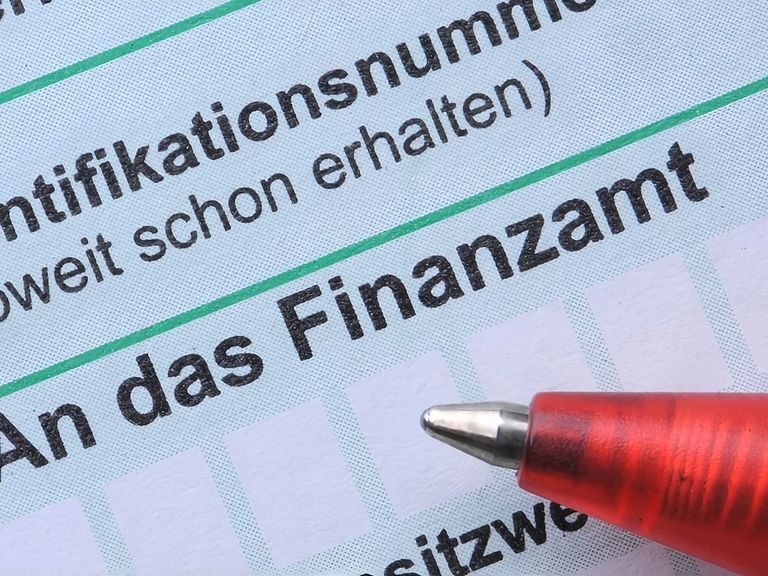
The first time a payroll concept genuinely surprised me was not in Germany. It was back home in Finland, where the state collects a church tax on behalf of the Lutheran and Orthodox churches straight through the normal tax system, and you keep paying it until the day you formally resign your membership. So when I first dealt with German payroll, the Kirchensteuer was easy to recognize. Germany uses the same basic mechanism, a religious levy that the state collects through the payroll and tax system, but the specifics are its own: the rate depends on the federal state, church membership is read from the employee's tax record rather than asked about directly, and the deduction stops only when the worker formally leaves the church. For anyone running German payroll, the church tax is worth understanding properly, because it is withheld automatically and the amount is not trivial.
What it is, and how it is calculated
The Kirchensteuer is a tax that religious communities recognized as public-law corporations are entitled to levy on their members, and the German state collects it for them through the payroll and income-tax system. The important structural point is that church tax is not a percentage of salary. It is a percentage of the employee's income tax. So the base is the Lohnsteuer already calculated on that person's pay, and the church tax is an additional amount charged as a percentage of that income tax.
The rate is either 8 or 9 percent of the income tax, and which rate applies depends on the state. In Bavaria and Baden-Württemberg the rate is 8 percent; in all the other Bundesländer it is 9 percent. Because the base is the income tax rather than the gross salary, the real cost scales with how much tax someone already pays: a higher earner in a 9-percent state pays a meaningfully larger church tax than a lower earner, because the church tax is a percentage of the income tax and the higher earner's income tax is larger to begin with.
Two refinements matter at the extremes. Most states apply a cap, the Kappungsgrenze, which limits church tax to a set percentage of taxable income for high earners. And there is a separate charge, the besonderes Kirchgeld, a special church fee that can apply when a church member is married to a higher-earning spouse who is not a member and the couple is assessed jointly; it is based on the couple's combined income. Neither of these applies to most employees, but both explain why the church-tax figure for a high earner or a married employee sometimes looks different from a flat 9 percent of their own income tax.
Which faiths participate, and which do not
This is the part that differs most from country to country, so it is worth being precise. In Germany the communities that levy church tax through the state system are chiefly the Roman Catholic Church, the Protestant (Evangelical) regional churches, and Jewish communities, along with a few smaller recognized bodies such as the Old Catholic Church and some free religious congregations. Those are the memberships that trigger the withholding.
A large share of religious communities do not participate at all. Muslim, Orthodox, Buddhist, and most other faiths in Germany do not levy the state-collected church tax, and neither, of course, does having no religious affiliation. So a Muslim employee and an employee with no registered religion are treated the same way for this specific tax: no Kirchensteuer is withheld. Membership in a participating church is the only thing that triggers it.
How the employer knows, and how a worker stops paying
Employers do not ask staff about their faith directly, and they do not guess. Each employee's religious affiliation for tax purposes sits in the ELStAM record, the electronic wage-tax data the tax authority maintains and the employer retrieves. If that record shows a participating church, the payroll withholds church tax at the state rate automatically; if it shows none, nothing is withheld. The employer is simply applying the data the state provides.
Stopping the tax is entirely in the employee's hands, and it is the same logic I grew up with in Finland: you pay as long as you are a member, and you stop by leaving. In Germany that step is the Kirchenaustritt, a formal declaration of departure made to a civil authority, the registry office or local court depending on the state, usually for a small administrative fee that varies by state: nothing in several eastern states such as Berlin and Brandenburg, and up to around 60 euros elsewhere. Once the exit is processed and the ELStAM record updates, the payroll stops withholding church tax from the following period. It is worth being clear with employees about one thing here: the decision and the paperwork are personal and civil, not something the employer arranges, and the change shows up in payroll only after the state updates the record.
One detail catches internationally mobile staff in particular. Affiliation is often set at the Anmeldung, the mandatory address registration that new arrivals complete, where a person states their religion. Someone who was baptized or registered as a member elsewhere can find themselves marked as a member and taxed accordingly, even if they no longer consider themselves religious, until they formally exit. A new employee who is surprised to see Kirchensteuer on a first German payslip has usually, without realizing it, declared a church membership on that registration form.
What this means for running German payroll
The church tax is not complicated to administer once the logic is clear, but it has to be exactly right because it is withheld automatically and it is visible on every payslip. Three things matter most. The rate has to match the employee's work state, 8 percent in Bavaria and Baden-Württemberg and 9 percent everywhere else. The withholding has to follow the ELStAM affiliation data rather than any assumption about a person's beliefs. And when an employee completes a Kirchenaustritt, the payroll has to stop the deduction as soon as the tax record updates; continuing to withhold after a valid exit means deducting money the employee no longer owes, which the employer then has to refund and correct.
Flux applies the correct church-tax rate by state, withholds only where the ELStAM record shows a participating membership, and stops the deduction when the record changes, so the church tax on the payslip matches the employee's actual status. For an employer, the practical points are short. The rate is set by the employee's work state, 8 percent in Bavaria and Baden-Württemberg and 9 percent elsewhere. Whether to withhold at all is determined by the ELStAM affiliation record, not by asking the employee about their religion. And leaving the church is the employee's own step, which the payroll reflects only once the exit is recorded in that data.

Niko Nurmentaus
Product Lead
Related Posts