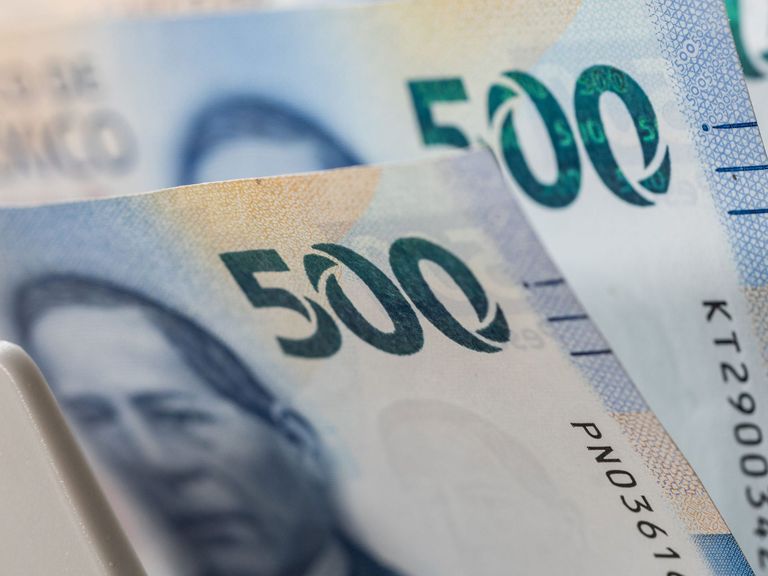
In Mexico, a large share of what an employee actually takes home never shows up as base salary. Much of it is paid as prestaciones (benefits): grocery vouchers, a savings-fund match, private medical insurance, meals, sometimes housing. What each one costs the employer and the employee depends less on its peso value than on how it is structured. A grocery voucher structured correctly is partly free of income tax and partly excluded from social-security contributions; the identical amount paid the wrong way is fully taxable and fully contributory. Same money, two very different bills.
Because benefits make up a sizable share of total compensation in Mexico, how they are structured drives a large part of what payroll actually costs.
Two separate tests: income tax (ISR) and the social-security base (SBC)
Every benefit in Mexico is judged by two independent tests, one for income tax and one for social security, and the two have separate limits. A benefit can be exempt under one and fully caught by the other, so they cannot be treated as a single test.
The first is ISR, the federal income tax withheld from the employee. The second is the SBC, the Salario Base de Cotización, the base for social security. The SBC decides how much the employer and the employee each pay into IMSS (health, pensions, disability) and INFONAVIT (housing). A higher SBC means higher contributions on both sides.
The two determinations are made independently: a benefit can be exempt from ISR and still form part of the SBC, or the reverse. The two systems rest on different statutes, the LISR for income tax and the LSS for social security, with different definitions and different peso limits, so the income-tax treatment does not imply the social-security treatment. An accountant who verifies only the ISR side and assumes social security follows will under-report the SBC and expose the client to an IMSS assessment later.
The structure Mexican law rewards is called previsión social: social welfare benefits granted, in the law's words, "de manera general," to all workers on the same terms. A benefit structured as genuine previsión social earns favorable treatment under both systems. Restrict that same benefit to executives, pay it in cash where the law requires in-kind delivery, or exceed the statutory limits, and the favorable treatment is lost.
The previsión social exemption, and its backwards cap
The income-tax exemption for previsión social is set out in Article 93 of the Income Tax Law (LISR Art. 93). Article 93 caps how much previsión social an employee can receive tax-free in a year, and the cap is counterintuitive: lower-paid workers get the larger exemption, higher-paid workers the smaller one.
For a lower-earning employee, whose salary plus previsión social does not exceed seven annual UMA (7 x MXN$42,794.64, or MXN$299,562.48 for 2026), the exempt cap is the full seven annual UMA. In practice that is more than the benefits will ever reach, so the whole thing is tax-free. For a higher-earning employee, above that seven-UMA threshold, the exempt cap drops to one annual UMA: MXN$42,794.64 for 2026. Low earner, high cap; high earner, low cap. So the identical benefit can be entirely tax-free for a junior employee and mostly taxable for an executive, and payroll has to apply the one-UMA cap to the higher earners.
The UMA (Unidad de Medida y Actualización) is the reference unit most of these limits use, and INEGI resets it each year. For 2026 it is MXN$117.31 per day, MXN$3,566.22 per month, and MXN$42,794.64 per year, effective 1 February 2026, so every cap tied to the UMA changes on that date.
Vales de despensa: the 40%-of-UMA exclusion, worked through
Take vales de despensa, the grocery vouchers loaded onto a card from an authorized issuer. They are the most popular supplementary benefit in Mexico, and they show both limits at work: an income-tax exemption and a separate social-security exclusion.
For the SBC, Article 27 of the Social Security Law (LSS Art. 27, fraction VI) excludes grocery vouchers from the contribution base up to 40% of the monthly UMA. For 2026 that ceiling is:
- 40% x MXN$3,566.22 = MXN$1,426.49 per month
An employer that loads a card with exactly MXN$1,426.49 a month gets the full benefit under both systems. The whole amount is excluded from the SBC, so it never adds to IMSS or INFONAVIT contributions, and it stays within the annual previsión social cap, so it is exempt from ISR as well.
Now push the same benefit to MXN$2,000 a month. The first MXN$1,426.49 keeps its treatment. The excess, MXN$573.51, is taxed as ordinary earnings: that amount is added to the employee's taxable income for ISR and integrated into the SBC, so both sides pay income tax and social-security contributions on it every payday for the rest of the year. Paying MXN$2,000 is not itself the mistake. The mistake is assuming the whole MXN$2,000 keeps the voucher's tax treatment, when only the first MXN$1,426.49 does and the rest is ordinary pay.
The savings fund, and why food and housing must be paid in kind
The fondo de ahorro, an employer-matched savings plan, follows the same shape with its own limits. The employer's contribution is exempt from ISR and excluded from the SBC only if it stays inside two ceilings at once: no more than 13% of the employee's salary, and no more than 1.3 annual UMA, which is MXN$55,633.03 for 2026 (LISR Art. 27, fraction XI). The employer must also not contribute more than the employee does, the plan must be open to the whole workforce, and withdrawals are limited. These two kinds of limit are penalized differently. Exceed a peso ceiling and only the excess loses its treatment, as with the vouchers. Fail one of the structural conditions, though, and the entire employer contribution becomes taxable and contributory, not just the amount above a ceiling.
Food and housing have a further condition that a 2024 Supreme Court decision made stricter. To be excluded from the SBC, meals and lodging must be delivered in kind, an actual cafeteria meal or an actual apartment, not a cash allowance labelled "food" or "housing." The Supreme Court settled this in Contradicción de Criterios 202/2023 (17 April 2024), and IMSS codified it in Criterio 02/2024. A cash "food allowance" is integrated into the SBC peso for peso, whatever the payslip calls it.
Aguinaldo and PTU: the same principle, on statutory pay
The mandatory payments run on identical logic. The year-end aguinaldo is exempt from ISR up to 30 days of UMA (30 x MXN$117.31 = MXN$3,519.30 for 2026), and profit sharing, the PTU, is exempt up to 15 days of UMA (MXN$1,759.65), each under LISR Art. 93. Anything above those thresholds is taxable, the same UMA-denominated pattern as every other exemption in the system.
Why benefit structuring is demanding to get right
Structuring compensation as prestaciones is legitimate and valuable. Mexican law openly invites it, which is why grocery vouchers and savings funds are everywhere. Three things make the design demanding, and they compound. First, the ISR exemption and the SBC exclusion are separate limits with separate rules, so a benefit has to satisfy both. Second, the caps are denominated in UMA, which INEGI resets every 1 February, so an exemption figure that was correct last year is usually wrong this year and has to be updated. Third, exceeding a cap and failing a structural condition are penalized differently. If a benefit goes over its peso cap, only the excess becomes ordinary taxable, contributory pay. If it fails a structural condition, such as cash paid where in-kind delivery is required or a plan closed to part of the workforce, the whole benefit becomes fully taxable and fully contributory.
In practice that means rechecking two separate limits against a new UMA every February, and confirming that the structural conditions still hold for each benefit, across every client and every payday. Flux applies the current UMA caps and the separate ISR and SBC treatments to each prestación on every run, so the exemptions stay correct as the UMA changes and the SBC is reported in full. A benefit is only worth structuring if the amounts behind it are right on the day it is paid.

Greg Miaskiewicz
CEO & Co-Founder
Related Posts