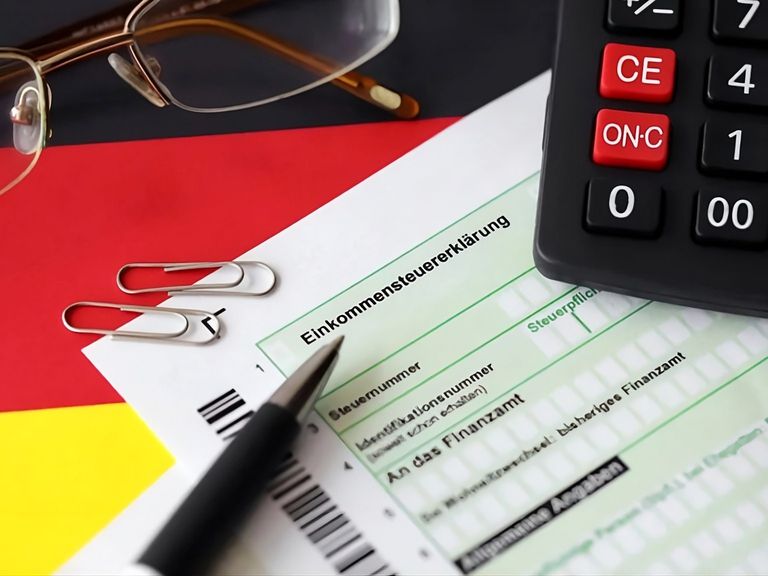
The German onboarding mistake that costs the most is a sequencing one, and it surprises companies used to registering new hires after they start. In several industries, Germany requires an employer to report a new worker to the authorities on the day they begin, before their first hour of work, not within a week. In construction, hospitality, transport, cleaning, security, and meat processing, this immediate report (the Sofortmeldung) is how the customs authority polices undeclared work. Miss it and the hire can be treated as Schwarzarbeit (undeclared work), with back payments and fines. Even outside those sectors, the German setup has a longer lead time than most countries, because the registrations are sequential: one number cannot be issued until another exists. So the real skill in German onboarding is starting early and doing the steps in the right order. Here is that order.
Before the first hire: the employer registrations
Germany makes an employer build a chain of registrations before a single employee can go on payroll, and the pieces depend on each other, so a realistic lead time is several weeks.
The company must be registered (commercial register and trade office), have a tax number from the tax office (Finanzamt), and hold an ELSTER certificate for filing wage tax electronically. Two employer-specific registrations then matter most. First, statutory accident insurance: the employer registers with the relevant trade association (Berufsgenossenschaft), which is employer-funded and covers workplace injuries. Since 2024 the company number this generates is a prerequisite for the next step. Second, the employer number (Betriebsnummer) from the Federal Employment Agency, which appears on every social-security filing. Because the Betriebsnummer now follows the accident-insurance registration in sequence, the realistic timeline is three to four weeks, not three to four days.
One point that trips up companies from other countries: the employer does not choose the employee's health insurance fund. The employee picks their statutory health insurer (Krankenkasse), and that fund is the collection point that gathers and distributes all of their social contributions. The employer's job is to register the worker with the fund the employee chose, which means the payroll system has to be able to file the standardized social-security notifications.
Collect the worker's details
Before the first payroll the employer needs the worker's 11-digit tax ID (Steuer-Identifikationsnummer), their social insurance number (Sozialversicherungsnummer), the name of the health insurer they have chosen, and an IBAN for salary payment. With the tax ID and date of birth, the employer retrieves the worker's electronic wage-tax features (ELStAM), which supply the tax class, church-tax status, and child allowances automatically, so none of that is keyed in by hand.
The right-to-work check depends on nationality. An EU, EEA, or Swiss national needs no work permit; a valid passport or ID is enough. A non-EU national must hold a residence title that permits work, and the employer must verify it before employment starts and keep a copy for the whole employment. Employing someone without a valid permit means a fine of up to €500,000, so the check must be completed and the copy kept on file before the worker's first day, not left as follow-up paperwork.
Register the new hire for social security
Registering the new hire for social security is the step with the deadlines that matter. The employer registers the worker electronically with the health insurer the employee chose, and that fund coordinates the four branches of social insurance: pension, health, long-term care, and unemployment. The standard deadline is with the first payslip and no later than six weeks after the start date.
The exception is the immediate report (Sofortmeldung) mentioned at the start. In the at-risk sectors (construction, hospitality, transport, cleaning, security, exhibitions, meat processing, and forestry), the worker must be reported before they begin working, on the first day. The purpose is anti-fraud, and the customs authority enforces the rule, so in those industries the six-week deadline does not help: the report is due before the worker's first hour.
Put the contract and the written terms in place
Germany does not require a permanent contract to be in writing, but it does require the employer to give the employee a written record of the essential terms of the job, under the Evidence Act (Nachweisgesetz). Since the 2022 update, the core items (the parties, start date, workplace, job description, pay, and working hours) are due on the first day, and the remaining terms follow within the first week. Since 2025 this record can be provided in text form, such as a signed PDF, rather than only on paper.
Fixed-term contracts have a stricter requirement worth getting exactly right. A fixed-term agreement must be signed in writing, with a handwritten signature, before work begins. If the signature comes even a day late, the fixed term is void and the contract is treated as permanent, which is rarely what the employer wanted. So a fixed-term hire should not start until the signed contract is in hand.
The probationary period (Probezeit) can be up to six months. During probation, either side can end the contract on two weeks' notice without giving a reason; once probation ends, the standard notice periods and dismissal protection apply.
Set up the payroll
German payroll has two parts to configure, wage tax and social contributions, and both are driven by data already collected.
Wage tax runs off the tax class (Steuerklasse) retrieved through ELStAM, and there are six classes depending on marital status and whether the worker has a second job. The income tax then has two add-ons: the solidarity surcharge, which now applies only to higher earners, and church tax of 8 or 9 percent of the income tax for employees who are registered church members, pulled automatically from ELStAM.
Social contributions are shared roughly half by employer and half by employee, across four branches: pension at 18.6 percent, health at 14.6 percent plus the fund's supplementary rate, long-term care at 3.6 percent (with a surcharge on childless employees aged 23 and over), and unemployment at 2.6 percent. Each branch is capped by an annual contribution ceiling: for 2026, roughly €8,450 a month for pension and unemployment and €5,812.50 a month for health and care. The employer also pays accident insurance and a few small levies.
Two figures worth having on hand: the statutory minimum wage is €13.90 an hour for 2026, and the mini-job threshold, below which a simplified low-tax regime applies, is €603 a month for 2026.
Day-one housekeeping
A few obligations land on the first day. The employer confirms the accident-insurance registration, and files the Sofortmeldung in an at-risk sector. The worker receives the written terms and the health-and-safety briefing. Employee data is handled under German data-protection rules, which are strict about background checks and monitoring. For anyone under 18, a medical certificate and parental consent are required before the start.
What automation handles, and what still needs a person
The pattern across German onboarding is that the hard parts are not judgment calls, they are sequence and timing. The registrations have to happen in the right order and early enough, the Sofortmeldung deadline is unforgiving in certain sectors, and the contribution rates and ceilings change each January. Done by hand, the failures are quiet: a fixed-term contract signed a day too late, a Sofortmeldung nobody filed, a contribution ceiling still set to last year's number. Flux keeps this current: we file the social-security notifications on time, pull the current tax classes through ELStAM, apply the contribution rates and ceilings for the year, and keep the minimum wage up to date, so a new hire is registered on time and the first payroll uses this year's figures. That leaves the payroll team doing the part that needs a person: getting someone productive and welcome in their first week.

Niko Nurmentaus
Product Lead
Related Posts