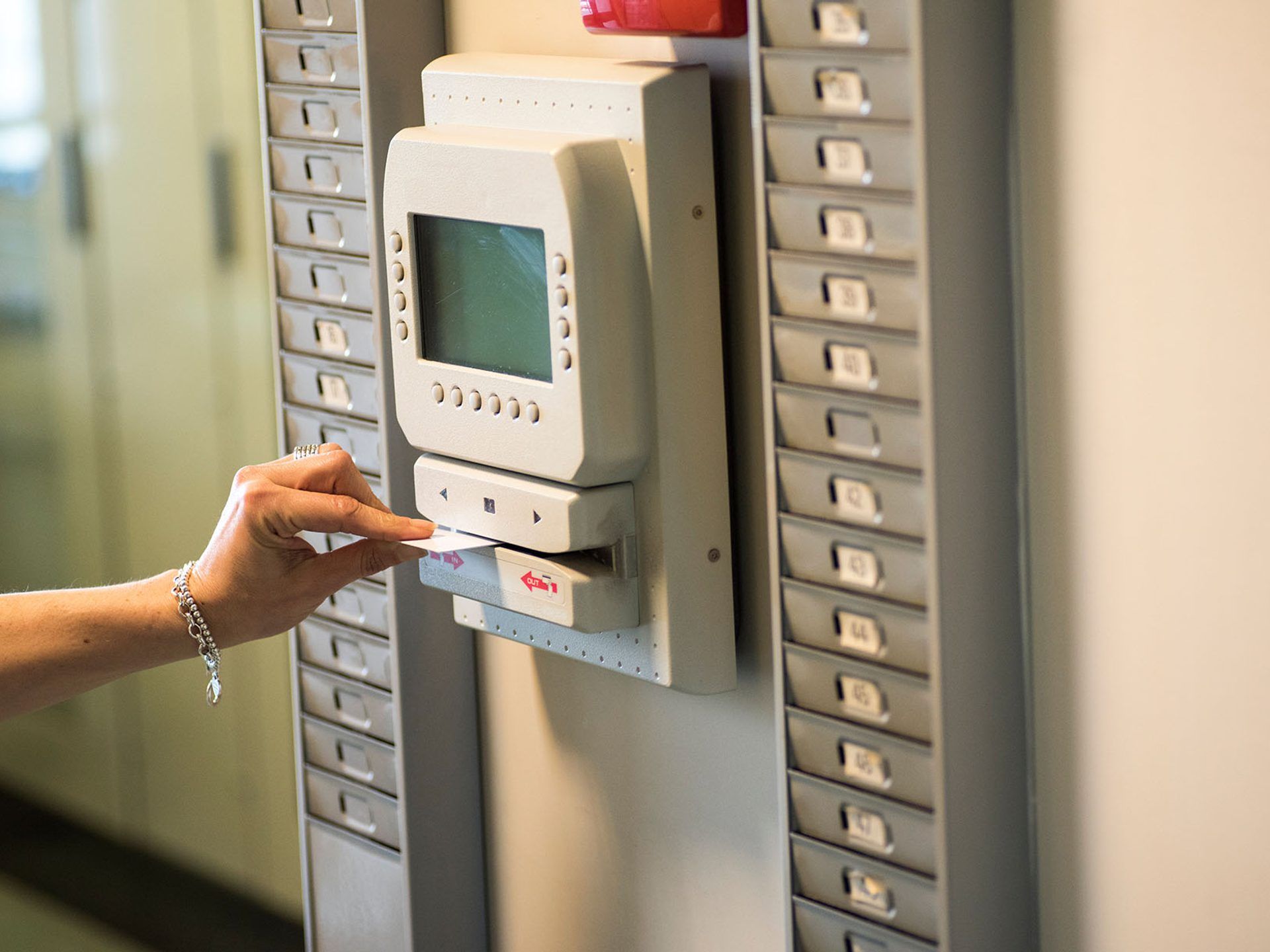
Since 2022, employers in Germany have had to record the full working hours of essentially every employee, not just overtime. Many employers do not realize this, because no new statute created the duty. A single decision by the Federal Labour Court reinterpreted an old workplace-safety law, and that reinterpretation made comprehensive time tracking a legal requirement. Plenty of employers still believe they only need to record overtime, as was the rule before 2022, and a company still working on that basis is already out of compliance.
Let me walk through what the court actually decided, how the rule changed, which employees it covers, and why the statute everyone keeps waiting for still has not arrived.
The court decision that changed the rule
On 13 September 2022, the Bundesarbeitsgericht, Germany's highest labour court, ruled that employers are obliged to record the working time of their employees, and that the obligation already exists in current law. The court did not invent a new duty out of thin air. It read the duty into the Occupational Health and Safety Act (Arbeitsschutzgesetz), specifically the employer's general obligation to organize work safely, and it did so in light of a 2019 decision of the European Court of Justice.
That European ruling, the CCOO case, held that member states must require employers to set up an objective, reliable, and accessible system to measure daily working time, because without one the limits on working hours and rest periods cannot actually be enforced. The German court took that reasoning and applied it domestically: if the safety law requires employers to protect employees, and the EU requires a real system for measuring hours, then German employers must record all working time now, without waiting for a dedicated statute. The practical result is a duty to capture the start, the end, and the total duration of each employee's daily working time.
What changed from the old rule
The reason this landed as a genuine shift is that German law already had a narrower recording rule, and most employers had built their habits around it. Under the Working Hours Act (Arbeitszeitgesetz), employers were required to record only the hours that exceeded the standard eight-hour day, plus work on Sundays and public holidays. In other words, ordinary hours went unrecorded, and only the exceptions had to be documented.
The 2022 ruling widened that obligation to all working time, not just the overtime slice. A company that diligently logged the hours above eight per day but never recorded the first eight is now under-recording. This is the point most worth flagging for a finance or HR leader: the old "just track the overtime" approach was correct for decades and is not correct anymore.
Which employees have to be recorded
The obligation reaches employees (Arbeitnehmer) broadly, and that breadth is the point. It is not limited to hourly or shift workers. Salaried staff, office workers, and people on flexible arrangements are all covered.
Two groups deserve a closer look. The first is senior executives, the leitende Angestellte, who are exempt from the working-hours limits of the Working Hours Act. Because the recording duty flows from the safety law rather than the working-hours law, and the safety law applies to all employees, whether these executives must have their hours recorded is genuinely uncertain, and the cautious approach many employers take is to record them anyway. The second is people on trust-based working time (Vertrauensarbeitszeit), the arrangement where an employee manages their own schedule without clocking in. That model survives the ruling, but with a condition: the hours still have to be recorded. An employer can delegate the actual recording to the employee, which keeps trust-based work workable, but the employer remains responsible for making sure the hours are captured. The employer can hand off the logging, but not the legal responsibility for making sure it happens.
The law that still has not arrived
If all of this sounds like it should be written into a clear statute, the government agrees, and has been trying. In April 2023 the labour ministry published a draft law, the Arbeitszeiterfassungsgesetz, that would have made electronic recording the standard and given smaller businesses a transition period. That draft stalled, and as of early 2026 no new statute is in force. The 2025 coalition agreement revived the intent, proposing electronic recording with transition periods for small and medium businesses, a shift from a daily to a weekly maximum working time, and an explicit promise that trust-based working time would remain possible. None of that is law yet either.
The takeaway from the legislative limbo is not "wait and see." The court was explicit that the duty exists under current law, so the absence of a dedicated statute does not suspend the obligation. That absence leaves only some of the details unsettled, such as whether recording must be electronic and how quickly. The floor is clear even while the ceiling is still being built.
Works councils and enforcement
Two more pieces shape how this plays out in practice. Where a company has a works council (Betriebsrat), the council has co-determination over how a time-recording system is introduced and designed, though not over whether time is recorded at all, since that part is a legal duty rather than a matter for negotiation. In a business with a works council, the recording system is usually governed by a works agreement, and the council has co-determination over which system is introduced and over how the recorded data may be accessed and used.
On enforcement, there is a gap worth understanding honestly rather than relying on. At present there is no automatic fine simply for failing to record hours. The state labour authority generally has to issue an order first, and only if a company then ignores that order does a fine of up to 30,000 euros come into play. Some of the federal states have begun inspecting. I would not treat the current soft enforcement as a reason to delay, because the underlying obligation is already in force and the enforcement posture is the part most likely to harden.
What employers must do now
The practical position in Germany today is straightforward, even if the politics around it is not. Recording all working hours for essentially every employee is a legal requirement right now, grounded in the safety law as the Federal Labour Court read it in 2022, not something that begins whenever the promised statute passes. In practice that points to a few concrete steps. Record the start, end, and duration of daily hours for all employees. Record senior executives too, given the grey area around them. Trust-based working time can stay, but the employee logs their own hours, with the employer still accountable for the record. And expect the coming law to require electronic recording.
The obligation itself is settled and already in force; what is still unsettled is the statute that will eventually spell out the details, most likely a requirement to record electronically. The practical consequence is that recording all working hours now is not premature. An employer that already captures the start, end, and duration of every employee's day will meet the Arbeitszeiterfassungsgesetz when it finally passes, instead of having to build a recording system against a deadline.

Greg Miaskiewicz
CEO & Co-Founder
Related Posts