Remote Work in Germany: The Protections, the Allowances, and the Truth About the Right to Disconnect
In Germany, "working from home" is not one legal status but three, and which one a worker is on decides both the protections they receive and the obligations the employer takes on, from who pays for the desk to whether the full workplace-safety rules apply. I have watched payroll teams flatten all three into a single checkbox on an employee record, and that is where the trouble starts. If you run German payroll and you do not know which of the three a person is on, you are guessing at what the employer owes and what the law requires. Let me lay out the three, then the protections that apply no matter what, the money side, and the part everyone asks about: the right to disconnect.
There is no right to work from home
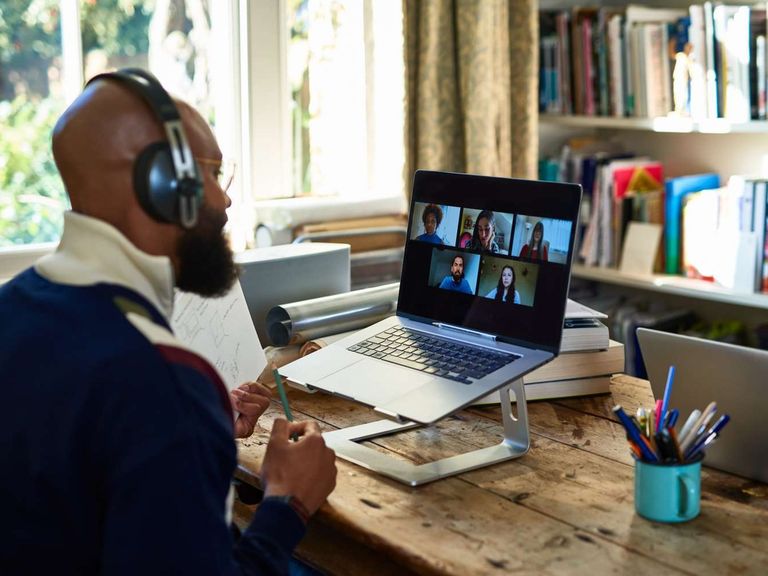
Start with the thing that surprises people. German law gives employees no general right to work from home. A statutory Homeoffice entitlement was debated for years and never passed. Whether remote work is allowed is the employer's decision, usually set in the employment contract or a works agreement. About a quarter of German employees (around 25% in 2025, per the ifo Institute) work from home at least part of the time, but every one of those arrangements exists because the employer agreed to it, not because a statute requires it.
The three arrangements, and why the label decides the obligations
German practice splits remote work into three types, and the type sets what the employer has to do.
Telearbeit (formal telework) is the heavily regulated one, defined in the Workplace Ordinance (Arbeitsstättenverordnung). Choosing Telearbeit puts a real cost on the employer: the employer must provide and install the full workstation at the employee's home, including furniture, equipment, and communications, and the home workplace has to meet the same ergonomic, lighting, and ventilation standards as an office.
Mobiles Arbeiten (mobile work) is the opposite, and is not written into German law at all. The employee works from wherever suits the task, a home, a train, a café, and only the basic Occupational Health and Safety Act applies. The employer does not have to build a compliant workstation.
Homeoffice, in everyday German usage, is a colloquial label for work done specifically at home, and legally it sits with mobile work: only the basic health-and-safety duties apply, not the full Workplace Ordinance.
The practical point for anyone running payroll or HR is that these are not interchangeable words. A worker on Telearbeit is owed a full, compliant workstation from the employer; a worker on mobile work or informal Homeoffice is not. If a worker is classified as the wrong type, the employer either provides equipment it does not owe or withholds equipment it is legally required to supply.
The protections that apply at home just as in the office
Whatever the arrangement, a set of protections applies at the kitchen table exactly as in the office.
Working-time law (Arbeitszeitgesetz) does not stop at the front door. The eight-hour standard day, the ten-hour absolute daily maximum, the mandatory breaks, and the ban on Sunday work all apply to home-based work. So does the eleven-hour daily rest period, which I will come back to, because it is the closest thing Germany has to a right to disconnect.
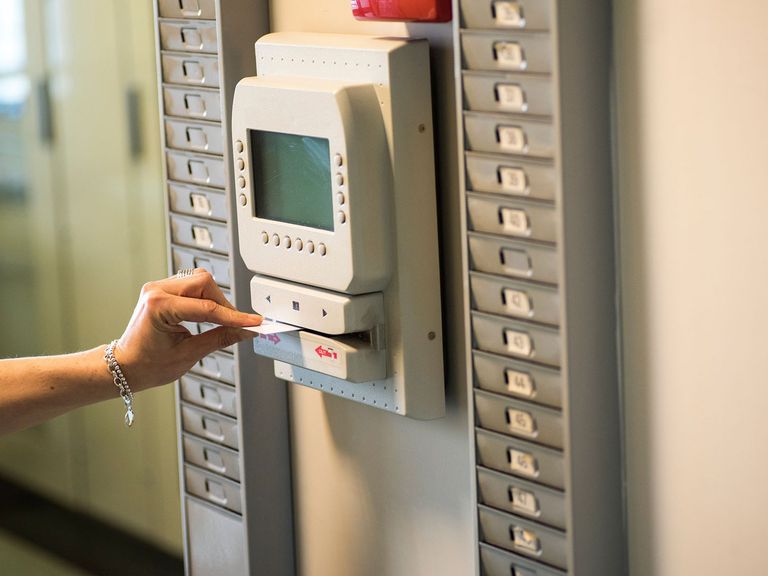
Time recording applies too. Since the Federal Labour Court ruling of September 2022, employers must systematically record all working hours, and home workers are not exempt. The employee can be asked to log their own hours, but the employer remains legally responsible for making sure those hours are recorded. A team that tracks office hours carefully and lets home hours go unrecorded is out of step with that ruling.
The employer's health-and-safety duties apply at home too. Under the Arbeitsschutzgesetz, the employer's general duty of care extends to the home workstation, including a hazard assessment of that workstation. And statutory accident insurance through the Berufsgenossenschaft covers work-related accidents at home, so an injury while working at the home desk is treated as a workplace accident, not a private one.
The money: what the employer owes, and what the worker can claim
German law and common expectations diverge here. For mobile work and informal Homeoffice, no statutory home-office allowance exists. No law requires the employer to pay a monthly stipend for electricity, internet, or a desk. Telearbeit is the exception, because there the employer must supply the equipment outright. Many employers pay an allowance anyway, but only because they have chosen to: either through their own internal policy (a voluntary company rule the employer sets) or through a works agreement (a Betriebsvereinbarung negotiated between the employer and the works council). Neither is required by law.
There is, however, a tax benefit, and the worker is the one who claims it, not the employer. The Homeoffice-Pauschale lets an employee deduct €6 for each day worked at home, up to 210 days a year, for a maximum of €1,260. The worker claims this on the annual income tax return, and no separate dedicated office room is required, which is what makes the flat rate useful for someone working from a corner of the living room. When an employer does provide equipment or reimburse work materials, those are generally tax-free for the employee. So the "subsidy" most German remote workers actually receive is a tax deduction they claim themselves, not a payment from the employer.
The right to disconnect: real in effect, not a single law
Of everything about German remote work, the right to disconnect is what people ask me about most, usually after seeing that France and Portugal have written such a right into law. Germany has no equivalent standalone law. No provision says an employer cannot email an employee after hours. But the protection exists, and it comes from two other places.
The first is the eleven-hour rest period in the Working Hours Act. An employee must have eleven uninterrupted hours between the end of one working day and the start of the next. A work call or a real batch of emails in the evening can count as work and interrupt that rest, and the eleven-hour clock then restarts, so the employee cannot lawfully begin the next morning until eleven hours after that late task ended. The rest rule therefore limits after-hours demands indirectly, by protecting the gap between two working days.
The second is co-determination. Works councils (Betriebsrat) have co-determination rights over working-time arrangements under the Works Constitution Act, and many German companies have negotiated disconnect rules directly into works agreements, from "no expected response outside working hours" to mail systems that hold messages overnight. Where a works council exists, the disconnect rules that bind an employer usually live in that agreement rather than in national law.
So when someone asks whether German workers have a right to disconnect, the accurate answer is: not as a named right, but yes in effect, through the mandatory rest period and through works-council agreements.
Works councils shape most of this
A works council (Betriebsrat) is not automatic. Employees have the right to elect one in any establishment with at least five permanent staff, but plenty of smaller German workplaces have none, and no employer is obliged to create one on its own. Where a works council does exist, remote work is rarely just an individual arrangement between employer and employee. Under the Works Constitution Act (Betriebsverfassungsgesetz §87), the council has co-determination over social matters, which include the rules on working time and the technical systems used to monitor staff, so the council must agree the working-time arrangements, the equipment provision, the data-protection measures, and the accessibility expectations that come with remote work. For a payroll or HR operator, the governing document for a remote worker is therefore often the works agreement rather than the individual contract, and the terms can differ from one employer to the next even within the same industry.
Cross-border remote work: social security and permanent establishment
Remote work rarely respects borders, so one more piece matters. When a German employee works from another country, or a worker abroad works remotely for a German employer, social security coordination comes into play. Within the EU, a worker is covered by one country's social security system at a time. Under the default rule, a worker who performs 25% or more of the work in their country of residence is generally covered there. Since the 2023 EU Framework Agreement on cross-border telework, the employer and employee can instead opt to keep coverage in the employer's country for telework up to 49.9% of working time, provided both countries have signed the agreement, which Germany has. An A1 certificate is the proof in either case. On tax, recent German guidance is reassuring for employers: a home office abroad generally does not create a taxable permanent establishment for the employer, because the employer has no power of disposal over the employee's private home, with management roles as the main exception.
What this means for running German payroll
The worker's protections at home are strong and mostly automatic, but they depend on details a manual process tends to lose. The worker's arrangement type determines whether the employer must supply a full workstation: Telearbeit requires it, mobile work and informal Homeoffice do not. Working-time limits, the eleven-hour rest, and mandatory time recording apply to hours worked from home the same as to office hours. The main allowance is not an employer payment at all but the €6-a-day deduction the worker claims on their annual income tax return. And the right to disconnect is delivered through the rest period and the works agreement rather than a single statute.
Tracking all of that by hand across a workforce, the arrangement type, the recorded hours, the rest-period interactions, the works-agreement terms, falls out of date the moment a worker moves from the office to Telearbeit, starts working from another country, or the works council signs a new agreement. Those same records are what a working-time inspection, an accident claim from the home desk, or a works-council dispute is judged against.

Niko Nurmentaus
Product Lead
Related Posts