Time Tracking in Mexico: The Duty That Already Exists, and the 40-Hour Reform That Raises the Stakes
There is a common misconception about time tracking in Mexico: because no law forces an employer to install a particular time clock, many companies assume that recording hours is optional or informal. It is not. The obligation to keep accurate records of when people work already exists, and it comes from an unusual place, the burden of proof in labour court. On top of that, the same 40-hour work-week reform makes an electronic time registry mandatory from January 1, 2027, which turns precise, electronic hour records from a practical defence into a hard legal requirement. Let me explain where the duty comes from today, what records an employer must keep, and what changes as the shorter week arrives.
The duty to keep hour records already exists, through the burden of proof
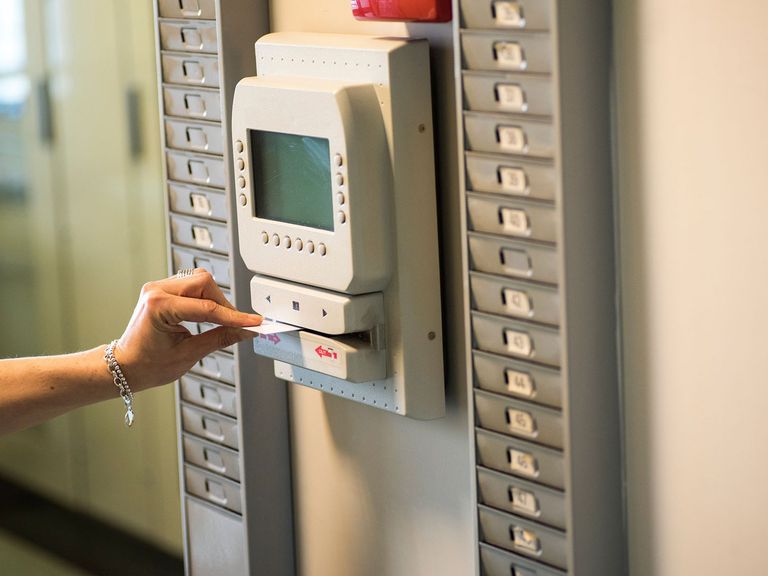
Mexico does not mandate a specific timekeeping method. A manual sign-in sheet is as legally valid as a biometric scanner. What Mexican law does instead is put the burden of proof squarely on the employer in almost any labour dispute. Under the Federal Labour Law (Ley Federal del Trabajo), the employer, not the worker, has to prove the facts of the employment relationship: the hours worked, the rest days given, the overtime authorized, and the payments made.
The mechanism that gives this teeth is the presumption that applies when an employer cannot produce the records. If a worker claims they were owed unpaid overtime or were dismissed unfairly, and the employer cannot show contemporaneous records to the contrary, the labour tribunal presumes the worker's version is true. So while there is no statute that says "you must run a time clock", the practical effect of the burden-of-proof rule is that an employer without accurate hour records will lose disputes it might otherwise have won. The Supreme Court reinforced this in 2025, confirming that social-security registration on its own is not enough to rebut a claim, and that attendance records and signed pay records are the evidence that actually counts.
It is worth being honest about the history here, because it explains why many employers have treated hour records loosely. Mexico has long had strong worker protections written into the Federal Labour Law and the Constitution, but for decades enforcement was weak: labour disputes went to tripartite conciliation and arbitration boards seen as slow and politically influenced, and inspection was patchy, so a company with sloppy records often faced little practical consequence. That gap has been closing. The 2019 labour-justice reform replaced the old boards with independent labour courts, the USMCA tied labour enforcement to trade, and now the 40-hour reform puts hour recording under active inspection by the labour ministry. The rules on the page are not new; what is changing is that they are increasingly enforced.
Which records employers must keep, and for how long
The Federal Labour Law lists the documents an employer must retain and be able to present in court: employment contracts, payroll, records of hours and overtime, rest days and vacation, and proof of payments. These are the records that decide a dispute, so they are best treated as a legal defence rather than an administrative chore.
The retention periods are where employers trip up, because two different laws apply and they do not match. The Labour Law requires payroll and attendance records to be kept for the last year of employment plus one year after termination. The Federal Tax Code requires records to be kept for five years from the date the related tax return was filed. Because payroll records serve both purposes, the safe approach is to keep everything for five years plus the current year, which satisfies both. An employee who leaves in early 2026 can generate a tax-retention obligation that runs into 2031, well beyond the one-year labour period, so the tax clock is usually the one that governs.
Any method is allowed, but biometric clocks need written consent
Since no particular system is required, employers are free to choose how they record time, from paper sign-in sheets to card readers to fingerprint or facial-recognition scanners. What matters legally is that the records are accurate, complete, and retrievable when a tribunal asks for them.
Biometric systems come with an extra obligation that many employers overlook. Fingerprints and facial scans are sensitive personal data under Mexico's data-protection law, so an employer cannot collect them on the basis of continued employment or an assumption of consent. Each worker has to give express written consent before biometric data is collected, after a privacy notice, and the employer should offer a non-biometric alternative to anyone who refuses. This area is also in flux: a March 2025 reform to the data-protection law changed the rules and moved enforcement to a new authority, so employers using biometric time clocks should confirm their consent process still meets the current standard.
The 40-hour reform: a shorter week phased over 2027-2030 and a mandatory electronic registry from 2027
Here is the part that answers "when do the rules change", because the record-keeping duty is already in force but the reason to care about it is about to grow. In March 2026 Mexico enacted a constitutional reform that cuts the standard work week from 48 hours to 40. The reduction is phased over four years rather than immediate: 48 hours through 2026, then 46 in 2027, 44 in 2028, 42 in 2029, and 40 in 2030. The overtime ceiling is being reworked on the same timeline. The same reform also introduces a mandatory electronic time registry (registro electrónico de jornada): from January 1, 2027, employers must record every employee's daily hours electronically rather than on paper, and the labour inspectorate (STPS) can review it. The detailed secondary legislation in the Federal Labour Law, which will spell out exactly how the shorter week, the new overtime limits, and the electronic registry operate, was still pending after the constitutional change, expected to follow within months.
The consequence for time tracking is direct. As the standard week steps down each year, the line between ordinary hours and overtime moves with it, and overtime in Mexico is expensive: the first block of weekly overtime is paid at double time and hours beyond it at triple. Since the May 1, 2026 reform these rates sit in LFT Art. 66 (double time, together with the weekly overtime cap) and Art. 68 (triple time); the reform repealed the old second paragraph of Art. 67 that previously set double time, so pre-2026 citations to Art. 67 for overtime pay are superseded. An employer that cannot show exactly how many hours each worker put in, against a threshold that changes every January from 2027 to 2030, is exposed to overtime claims it cannot rebut, under the same burden-of-proof rule that already applies. Precise hour records become essential rather than merely useful, and the weekly threshold they are measured against changes every year through the phase-in: 46 hours in 2027, 44 in 2028, 42 in 2029, and 40 in 2030.
What employers should do now to be ready for 2027
The practical position in Mexico is the opposite of "wait for a time-clock law". No such law is coming, and none is needed, because the burden-of-proof rule already makes accurate hour records a legal necessity today. An employer should record hours, rest days, and authorized overtime for every worker now, keep those records for five years plus the current year to satisfy both the labour and tax rules, and, if it uses biometric time clocks, hold express written consent from each worker with a non-biometric alternative available.
From January 1, 2027, two things change. The recording must be electronic, through the mandatory registro electrónico de jornada, so paper sign-in sheets no longer suffice. Each annual step of the reform also lowers the point at which ordinary hours turn into overtime, which is paid first at double time and then at triple. So the same records that defend against a dispute today also decide correct overtime pay, against a threshold that changes each year until 2030. Flux gives companies two ways to handle time tracking for workers. A company that already runs a time-and-attendance system can keep it and export the data into Flux for payroll. A company that would rather not can track and approve timesheets directly in Flux, with workers submitting their own hours in the product. Either way, Flux calculates overtime against the weekly threshold in force for that year, 46 hours in 2027 down to 40 in 2030, so each worker's recorded hours are paid at the correct ordinary, double-time, and triple-time rates.

Greg Miaskiewicz
CEO & Co-Founder
Related Posts